News summaries compiled and published by The Toryū Team from public sources · 28 September 2026, 09:05 CEST

2026-09-25 · bujinkan.se
Ken Banh interviews Gustavo Rodriguez of Bujinkan Bushin Dōjō in Västerhaninge after a weekend under Rob Renner in Barcelona. Renner has lived many years in Japan and regularly translated for senior Japanese Shihan. Rodriguez calls his teaching unique: deep Bujinkan and Japanese culture, plus an athletic background that breaks down principles Japanese instructors often take for granted, all in clear English. Takeaways include totoku—always ready for the next attack—and Renner’s depth on Sanshin and Kihon Happō. He stresses testing techniques on different partners as one of Bujinkan’s six treasures, and urges people who can to train with Renner at Honbu.
2026-09-25 · toryu.se
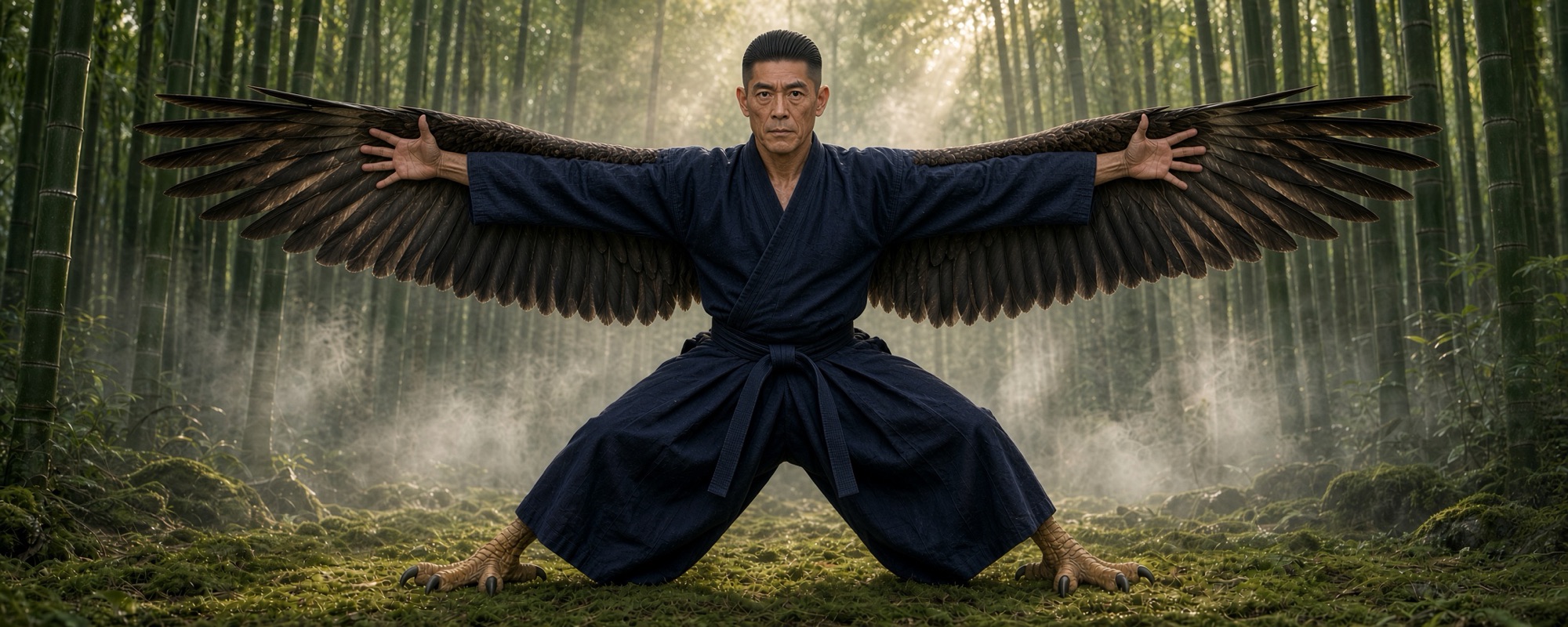
Toryū explains Taka no Mai (Hawk Dance), a TenChiJin Ryaku no Maki training form under Hira-ichimonji no kamae taught only by kuden. The side-to-side rock with arms out builds leg strength, balance, and hip and spine mobility in little space. The essay traces 鷹 (taka) versus falcon vocabulary and 舞 versus 踊り, then describes left/right weight shifts into strike kamae with Shikan-ken. Toryū also discusses tai shichibunme—working at about 70% so 30% remains in reserve—and recalls watching “Mr T” explore full reach at Daikomyosai 2009 in Ayase.
2026-09-18 · insideninjutsu.com
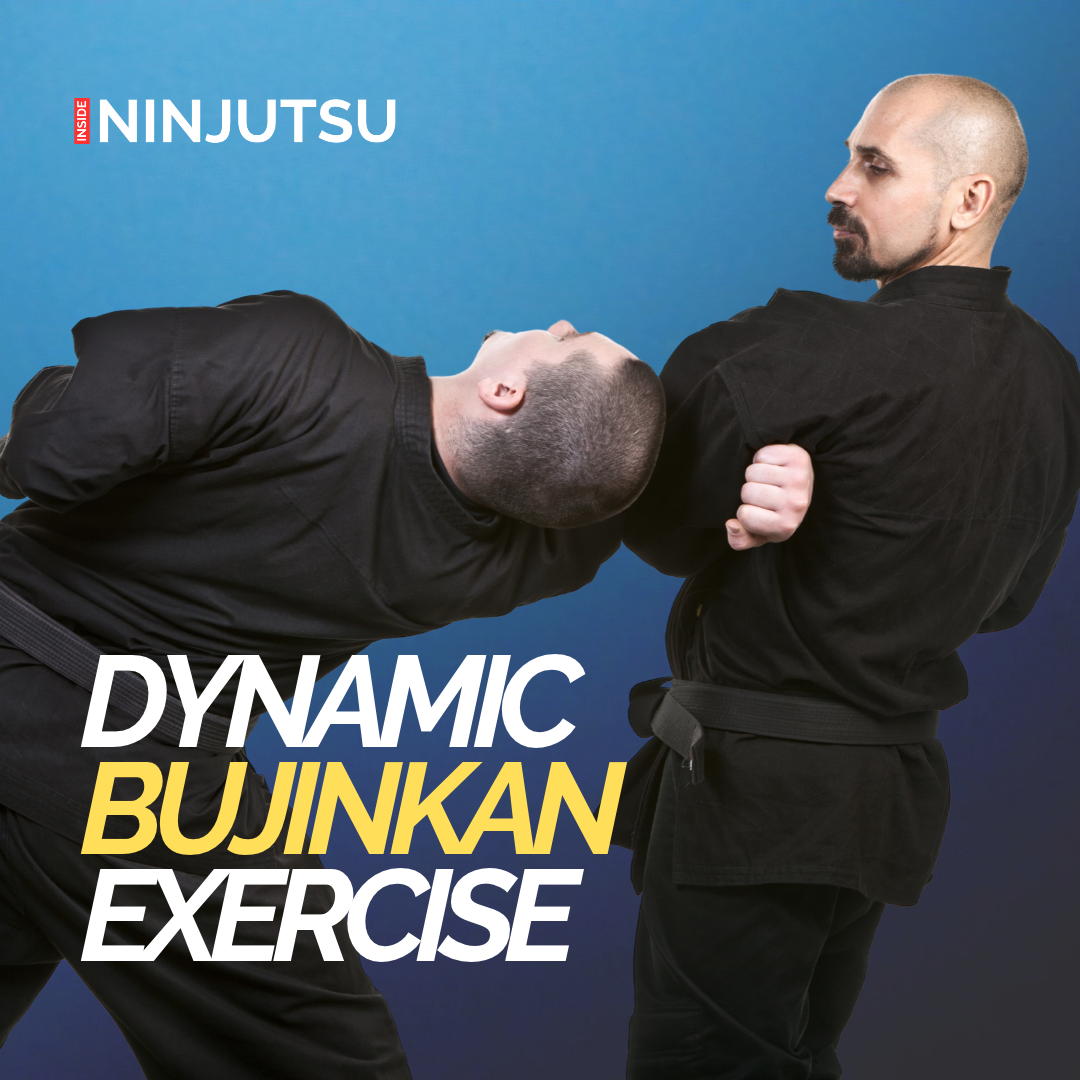
Inside Ninjutsu reports a simple partner drill from Bujinkan New York Dōjō that keeps training dynamic. One person applies an arm lock while the partner accepts the pressure, stays relaxed, and rolls out rather than fighting the lock with strength. As the roll finishes, the defender snatches the wrist and applies a counter lock. The sequence trains flexibility, ukemi, timing, and awareness in one flow, and shows how familiar locks and rolls can stay fresh without unnecessary resistance that risks injury.
2026-08-22 · insideninjutsu.com
Inside Ninjutsu covers Duncan Stewart of Bujinkan Tasmania Toku Bu Ryū Sui Dōjō, who criticises “rank collectors” that solicit titles and status. Stewart, who lived nearly a decade in Japan under Hatsumi and senior shihan including Nagato and Noguchi, says asking for rank shows ego, and that certificates alone do not prove skill or responsibility. He quotes Hatsumi’s warning about practitioners preoccupied with grades and being “Number One.” The piece argues budō should aim beyond paper ranks and recognition rather than empty recognition.

2026-09-08 · bujinkan.se
Exciting news for Bujinkan in Sweden: on behalf of Nagato-sensei, Sōke of Shinden Fudō-ryū, the Swedish Bujinkan Federation announces that a Japanese Dai Shihan will again visit Sweden. Nagato Taikai Stockholm will be held from 1 to 3 September 2028. The responsible organiser is Fredrik Markgren of Bujinkan Mutekatsu Hyōhō (Bujinkan Sundbyberg Mutekatsu Dōjō). More information will follow soon; the federation asks people to watch its channels and seminar listings. Written by Ken Banh and published 8 September 2026 on bujinkan.se.

2026-09-03 · webhiden.jp
On Sunday 4 October the 17th Japan Kobudo Exchange Embu Taikai will be held as an offering at Kashima Jingū in Kashima, Ibaraki, co-hosted by the Nihon Kobudo Association and the Japan Budokan. About 36 classical schools are listed, led locally by Kashima Shintō-ryū kenjutsu, with a temporary embujō in front of the main shrine. Opening ceremony is at 09:45, embu from 10:00, closing about 14:48. Admission is free. Schools named include Tenshin Shōden Katori Shintō-ryū, Hōzōin-ryū Takada-ha sōjutsu, Shindō Musō-ryū jōjutsu, and many more. Enquiries: Japan Budokan promotion section, TEL 03-3216-5134.

2026-08-29 · bujinkan.se
In mid-August Kan Junichi, soke of Gyokushin-ryū Ninpō and a senior student of Hatsumi Masaaki, held his first taikai outside Japan, in Ireland. Steven Hellingh of Bujinkan Stockholm Gyokuryu Dōjō describes a welcoming atmosphere that felt like a larger Honbu class. Training was structured around kihon, taijutsu, and weapons. A student from Japan showed the basic forms and translated; Kan then added kamae, kyojitsu, shizen no nagare, koppōjutsu, and henka. Hellingh says the teaching is concepts more than collecting techniques: first have a base, then dare to leave it. Be humble, he says, and just go.